
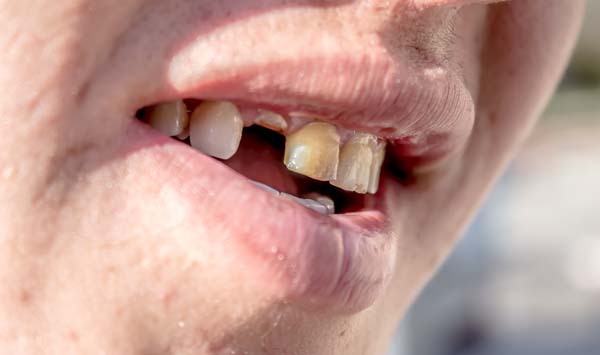
If you have a missing tooth, you may feel a lot of embarrassment. It is possible that you wish to avoid smiling or even being around other people. There can be health effects of missing a tooth too. It is difficult to eat when you have lost a tooth. You do not have to live with gaps in your mouth. Your dentist can recommend various treatments to replace the tooth or teeth you have lost.
Common ways to lose a tooth
Anyone can lose a tooth; no one is immune, even though teeth are strong and durable. Sometimes, an accident or mishap dislodges a tooth. This can happen in a car accident, a fall, or while playing sports. A hard blow to the face can knock out a tooth. Also, biting into a hard object can cause tooth loss. Some people may have a missing tooth due to the habit of grinding their teeth.
When these events do not cause tooth loss, poor oral hygiene is the culprit. Poor brushing and flossing habits can contribute to teeth deterioration and loss. Tooth decay can rot teeth to the point where they fall out. Gum disease can result in the tissue pulling away from the teeth. This makes the teeth loose and eventually fall out.
Dentures
For many years, this was the method that dentists almost always suggested for a missing tooth. It is still popular today for patients. Dentures come in permanent and removable forms. There are also full and partial dentures. Dentures consist of a gum-colored acrylic base and artificial teeth, which are usually made of ceramic or porcelain.
The dentures provide the bite force the person needs to chew most foods. The artificial teeth are also natural-looking and restore the person’s smile. Removable dentures rest on the gums. Permanent dentures clasp into implants or a bridge.
Dental implants
More recently, this has become the treatment that patients prefer. It requires more of a financial commitment, but implants last longer. For a missing tooth solution, dental implants can last more than 20 years. The dentist drives the titanium implants into the jaw. After a period of healing and the implants fusing with the bone, the patient returns and has another procedure. Here, the dentist attaches a smaller piece, called an abutment, to the implant.
A crown attaches to the abutment. The dentist can make the crown to be the desired color shade. Implants require good bone growth to be effective, so a bone graft is sometimes necessary. The patient must brush and floss implants regularly.
Bridge
For one missing tooth, a dental bridge makes a lot of sense. A metal framework holds together an artificial tooth, called a pontic. This goes in the gap. Adjacent to the gap, the dentist places crowns over the healthy natural teeth. These serve as an anchor for the pontic. A bridge is permanent and restores the function of the person’s mouth.
Replace that missing tooth right away
You can feel good knowing that tooth-replacement treatments are available. You can once again be happy with your appearance and smile. Your dentist can determine which treatment is right for you. Schedule an appointment to get started.
Request an appointment here: http://www.hendersonfamilydentistry.com or call Henderson Family Dentistry at (903) 657-3139 for an appointment in our Henderson office.
Check out what others are saying about our services on Google: Read our Yelp reviews.
[recent-blogs count="4" layout="horizontal"]
Comentarios recientes