
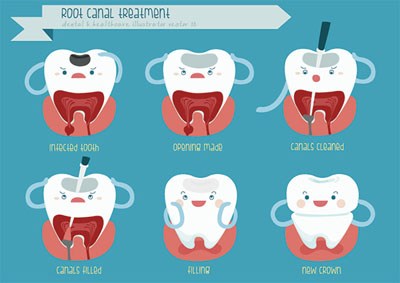
 If you are in need of a root canal, you should receive help today. Do not wait, or you could risk the individual tooth as well as the health of the teeth surrounding it. When your tooth dies, the teeth around it have to work extra hard to complete everyday processes. This puts unnecessary strain on your dental structure and can result in irreversible damage to the teeth and jawbone. We need to remove the infected tooth to prevent it from spreading to the other teeth. If you would like help getting rid of a dental infection, visit our Henderson office for a solution in the form of a root canal.
What is a root canal?
A root canal is the layman's term for root canal therapy or endodontic therapy. This procedure can remove an infection from deep within one's tooth. A tooth mainly consists of the crown and the roots. The crown is the visible part of the tooth that is easy to spot in a smile. The roots are the lifeline and the anchor of the tooth. Inside the center of the tooth is the dental pulp. The dental pulp is a combination of tissue, nerves, and blood vessels. When your tooth is growing, the dental pulp and roots are responsible for providing it with nutrients.
Fortunately, there is a way to remove the infection by the use of a root canal. Using special, small tools, we can access the interior of your tooth and reach into the root canal. Once we reach this area, we can remove the damaged dental pulp and the infection in the area. We will rinse out any other debris and fill in the now empty tooth with a rubber-like material called gutta-percha. As a final touch, we will seal off the newly fixed tooth with a restorative and durable crown or cap that is tooth-colored. Following your root canal, your tooth will work and look natural again.
Is a root canal painful?
A root canal in and of itself is not particularly painful since we fully numb the area before the procedure. It should actually remove the pain you are already experiencing due to infection. You may notice some discomfort before and after the procedure, due to the damage from the infection. Following the root canal therapy, the discomfort will quickly subside within a few days. During this time, allow your tooth to rest and heal. Do not put pressure on it, use it to chew or forget to use painkillers that we may recommend to dull the tenderness.
We hope you consider visiting our Henderson office for your root canal. You have the power to save your tooth, and you should use it to protect yourself from future dental troubles.
[recent-blogs count=4 layout="horizontal" category="root-canal-treatment-cat,do-i-need-a-root-canal-cat,preventative-dental-care-cat,emergency-dental-care-cat,emergency-dentist-cat,dental-checkup-cat,restorative-dentistry-cat,dental-restorations-cat"]
Comentarios recientes